Netanyahu's Bloc Falls Short as Israel Prepares for Coalition Talks
Final election results show the prime minister's camp securing 53 seats, forcing a complex negotiation period before the new Knesset is sworn in.
By Emily Lawson ·
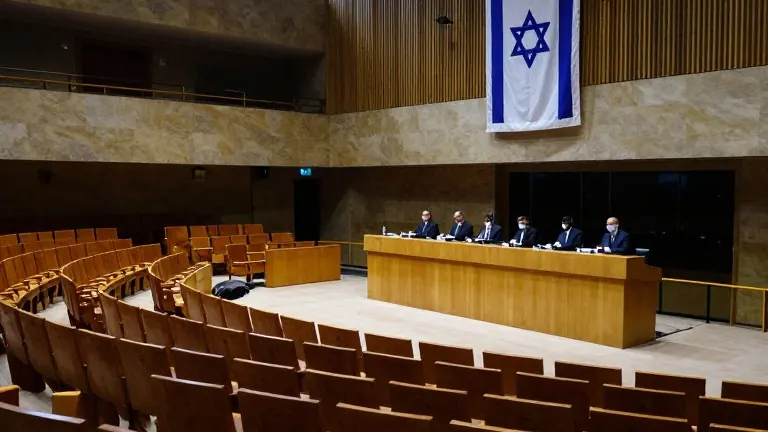
Netanyahu’s political camp secured 53 seats in the final tally of Tuesday’s elections, a result that ended his party’s standalone control of the Knesset. The count places the prime minister’s bloc one seat short of the 61 required to form a government without external partners. The opposition bloc took 48 seats, while Arab-led parties captured the remaining 19. This specific distribution means that no single faction holds enough power to rule alone, necessitating immediate and intricate coalition building.
The path to this impasse began with the release of final results early Friday morning. Prior to the announcement, tensions rose as Netanyahu and his Likud party promoted claims that Arab-led parties had stolen the vote, potentially with foreign help. The opposition responded by accusing Netanyahu of targeting the 20% of the population that is Arab. They highlighted the high turnout among Arab voters, many of whom expressed frustration with Netanyahu’s far-right allies, including National Security Minister Itamar Ben-Gvir, whose party lost seats in the process.
Supreme Court Justice Noam Sohlberg, head of the election committee, stated that serious suspicions of foreign interference had been raised. He sent a letter to the Shin Bet security agency requesting an investigation, noting he could not verify the claims himself. Israeli media reported that members of Likud pointed to Qatar, a nation viewed by many Israelis as a patron of Hamas. Qatar rejected the allegations, describing them as ridiculous and dangerous. Dean Livne, the acting director general of the election commission, warned that reports of the investigation were entirely unfounded and that the inquiry did not affect the final results submitted to the president.
In his first public comment following the results, Netanyahu posted on X that it is forbidden to form a coalition with Arab parties. He suggested that it would be treasonous for his chief rival, Gadi Eisenkot, to join forces with them. The Shin Bet sought to calm tensions, stating its investigation was not intended to cast aspersions on a demographic that exercised its right to vote in a democratic manner. The election committee also wrote to a member of parliament, asserting that allegations of systematic violations of electoral integrity were baseless. The committee expects findings from the Shin Bet within one week.
The next procedural step is scheduled for next Wednesday, when the results will be certified and submitted to President Isaac Herzog. Herzog will then task an individual with forming a new government. This mandate could go to Netanyahu, as the leader of the party that received the most votes, or to whoever the party leaders believe is best suited for the role. If multiple attempts to form a coalition fail, Israel faces a new election early next year. Herzog stated this week that he intends to do everything in his power to avoid that scenario.
The new Knesset is expected to be sworn in on November 10. Once it convenes, Eisenkot’s bloc may join forces with Arab parties to elect a new Knesset speaker. This move would give the opposition control over the parliamentary agenda. It could allow them to advance and pass legislation before a new government is formally established. Centrist politician Yair Lapid commented on X, asking Israelis for patience as the hard part begins. Hundreds of Israelis have already held rallies urging Eisenkot and other opposition leaders to partner with Arab-led parties, a move that has occurred only briefly before, in 2021.
If Netanyahu loses office, the change will trigger a cascade of legal and political events. Critics say he has long sought to avoid these consequences. He would face accountability over years of corruption allegations. Additionally, an inquiry would almost certainly begin into the security failures that preceded the Hamas-led attack on October 7, 2023. The political landscape in Jerusalem now hinges on whether opposition leaders can overcome their historical reservations to build a stable majority with their new partners.
Source: Greenwich Time