Israel's new parliament leaves prime minister question unresolved
Neither leading faction secured a majority in the 120-seat Knesset, forcing coalition talks or potential new votes.
By Richard Evans ·
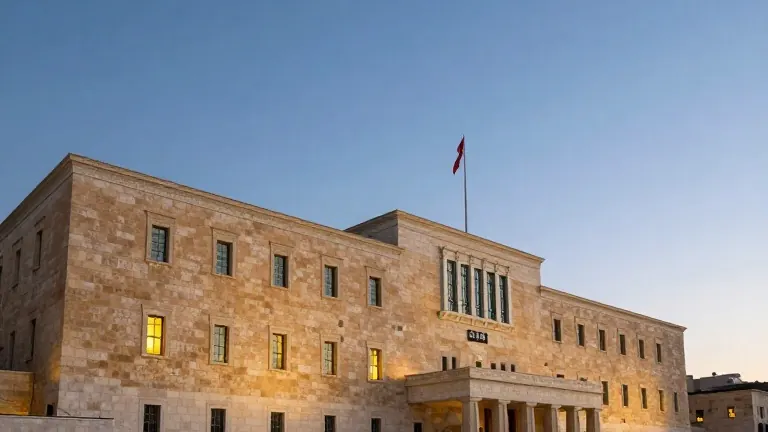
Israeli voters have filled the 120 seats of the Knesset, but the election results left the country without a clear prime ministerial winner. Party leaders must now negotiate to form a governing majority of 61 seats, a process that could determine the next head of state or trigger another vote.
Prime Minister Benjamin Netanyahu and his main rival, former military chief Gadi Eisenkot, both failed to win a majority on their own. The Arab-led parties captured a historic 19 seats, positioning them as potential kingmakers in the upcoming coalition negotiations. If neither camp can secure the necessary 61 seats, Israel will likely hold new elections early next year while Netanyahu remains in a caretaker role.
One potential path involves Eisenkot partnering with the Arab-led parties to create a 67-seat coalition against Netanyahu. This alliance would be politically risky for Eisenkot and his Jewish allies. Israel's Arab citizens, who make up 20 percent of the population, are Palestinians whose families remained in the country after the 1948 war. Many Jewish Israelis view these parties with suspicion, and Netanyahu has already characterized such an alliance as a threat to national security and Jewish identity.
An alternative scenario is a unity government where Netanyahu and Eisenkot join forces. This bloc would also hold 67 seats and would send ultranationalist and ultra-Orthodox factions to the opposition. However, Eisenkot and his allies have vowed not to sit in government with Netanyahu, citing his role in the security failures surrounding the Hamas attack on October 7, 2023, and his ongoing corruption trial. A Netanyahu-led government is unlikely to approve an official inquiry into that attack, a key demand of opposition voters.
Netanyahu may also attempt to poach defectors from the opposition bloc. He could target right-wing leaders Naftali Bennett and Avigdor Lieberman, who strongly support nationalist policies but have clashed personally with the prime minister for years. Eisenkot has fewer such options because Netanyahu's right-wing and ultra-Orthodox allies have remained fiercely loyal to him despite recent crises.
If coalition talks fail, the country faces another election. This outcome could hurt Netanyahu's opponents, who gained momentum from tens of thousands of Israelis who traveled abroad to vote in this cycle but may not return for a second round. Netanyahu would gain time to strengthen his position, potentially benefiting from smaller right-wing parties that failed to meet the parliamentary threshold and might switch to larger far-right groups or cease running.
Israel last faced a similar stalemate in 2019, which resulted in five elections over three and a half years. The current situation mirrors that history, with both major factions lacking the seat count required to govern alone.
Source: Stamford Advocate