Knesset vote leaves 59-seat gap for new Israeli government
Neither Netanyahu nor Eisenkot secured a majority, forcing complex negotiations or a return to the polls.
By Richard Evans ·
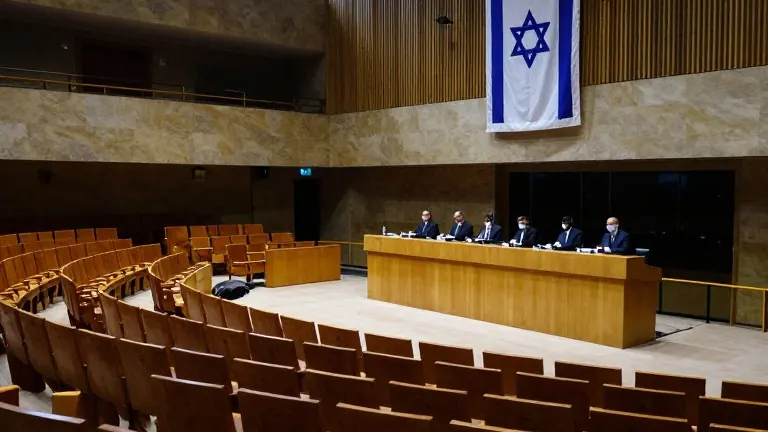
Israeli voters have selected the next 120 members of the Knesset, but no single camp holds the 61 seats required to form a government.
The results leave Prime Minister Benjamin Netanyahu and his main rival, former military chief Gadi Eisenkot, without a majority. Both leaders must now negotiate with smaller parties to bridge a gap of at least 59 seats to reach the necessary threshold.
Arab-led parties won 19 seats, a historic tally that gives them potential leverage over the outcome. These parties represent the 20 percent of the population with Palestinian heritage, a group that has close ties to residents of the West Bank and Gaza.
Eisenkot faces a mathematical path to power through an alliance with these Arab parties. Such a coalition would total 67 seats, creating a stable majority against Netanyahu. However, only one Arab party has ever joined a governing coalition, in 2021, and that administration lasted approximately 18 months.
Netanyahu is already characterizing an Eisenkot-Arab alliance as a threat to national security and Jewish identity. This framing pressures Eisenkot’s right-leaning allies to reject the partnership, despite the numerical advantage it offers.
An alternative scenario involves a unity government where Netanyahu and Eisenkot serve together. This arrangement would also provide a 61-seat majority, specifically 67 seats if all current supporters align. It would place Arab-led parties, ultranationalists, and ultra-Orthodox factions in the opposition.
This path requires Eisenkot to break a vow not to sit in government with Netanyahu. Eisenkot’s camp blames the prime minister for security failures during the October 7, 2023 attack by Hamas and cites his ongoing corruption trial. A unity deal would also force Netanyahu to drop far-right and ultra-Orthodox allies who have supported him through recent wars and crises.
Both leaders may also seek to recruit defectors from the opposing bloc. Netanyahu could target right-wing figures Naftali Bennett and Avigdor Lieberman. These leaders support nationalist policies, such as expanding settlements in the West Bank, which makes them poor fits for a pro-Arab coalition. However, they have vowed not to partner with Netanyahu due to personal clashes and disagreements over military exemptions for ultra-Orthodox Jews.
If negotiations fail, Israel faces new elections, likely in early 2027. Netanyahu’s government would remain in a caretaker role until then. This delay offers Netanyahu time to consolidate support. Smaller right-wing parties that failed to meet the threshold for parliamentary entry effectively wasted pro-Netanyahu votes. Their supporters might join larger far-right parties in a future vote, strengthening the prime minister’s position.
Israel has experienced this stalemate before. After a similar failure to form a government in 2019, the country held five elections over three and a half years.
Source: KPRC-TV