3,200-Pound NASA Satellite Expected to Reenter Atmosphere Wednesday
Debris from the Swift Observatory may fall between latitudes 20.6 degrees north and south, with a low risk of injury.
By Kendra Wilson ·
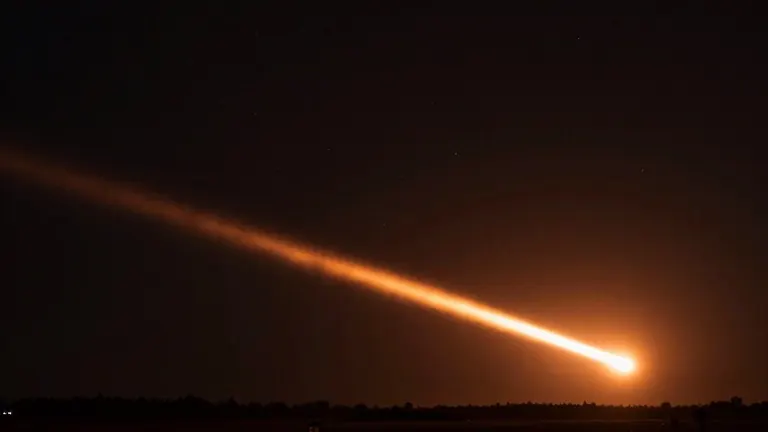
NASA expects the Neil Gehrels Swift Observatory to burn up over Earth early Wednesday morning.
The 3,200-pound spacecraft launched in November 2004 to study gamma-ray bursts, the most powerful explosions in the universe. Nearly 22 years later, it is falling back to Earth.
Most of the satellite will disintegrate in the upper atmosphere. NASA predicts that some pieces will survive the descent and hit the ground.
In a statement issued Monday, NASA said the risk of harm to people on Earth is approximately 1 in 2,100. The agency noted that debris is likely to land between 20.6 degrees south latitude and 20.6 degrees north latitude.
That band stretches about 1,420 miles above and below the equator. It covers parts of Central and South America, Central Africa, southern India, Southeast Asia, northern Australia, and large areas of ocean.
Prediction models vary on the exact time of reentry. The Aerospace Corporation estimated a 5:19 a.m. ET entry, with a margin of error of two hours. A more recent projection from the US Space Force placed the reentry at 7:42 a.m. ET, also with a two-hour margin of error.
NASA had attempted to save the observatory in July. Katalyst Space Technologies launched a spacecraft called LINK to grapple Swift and boost it into a higher orbit. The mission failed weeks after launch when LINK spun out of control before reaching the telescope.
Without the rescue, increased solar activity pushed the spacecraft lower. Earth’s atmosphere expanded due to solar flares, creating more drag. Swift dropped to 171 miles above the planet before stopping data collection.
A team at Penn State, home to the observatory’s Mission Operations Center, sent a final kill-switch command on October 20. The spacecraft entered safe mode and could no longer compensate for the increased drag.
Parker Wishik, a spokesperson for The Aerospace Corporation, said current debris mitigation standards require uncontrolled reentries to have an expected casualty rate of less than 1 in 10,000. He defined casualty as serious injury or death.
If Swift were launched today, it would face stricter end-of-life guidelines. The agency has used the observatory as a multi-tool for detecting cosmic flashes, asteroids, and comets. It has no direct replacement in orbit.
NASA recently issued a Request for Proposals to commercial companies. The agency is seeking plans to extend the life of the Hubble Space Telescope. Hubble, launched in 1990, has a 10 percent chance of deorbiting by 2032 and a 50 percent chance by 2033. No replacement for Hubble is expected before the 2040s.
Source: KTRK-TV · original report published