2-Day Festival Marks Nov. 1 and 2 as Dead Return
The Chicano movement helped spread the 3,000-year-old ritual from Mexico to cities across the United States.
By Mateo Castillo ·
Halloween ends at midnight on Nov. 1. The next event begins that same morning. This two-day festival, known as Día de los Muertos or Day of the Dead, marks the return of departed souls for a brief reunion with their families.
The holiday spans Nov. 1 and 2. Each day has a specific focus. According to legend, the gates of heaven open at midnight on Nov. 1. This allows the spirits of children to rejoin their living relatives for 24 hours. The spirits of adults return on Nov. 2. Participants believe these souls come back to eat, drink, dance, and play music.
History.com notes that the celebration’s roots go back 3,000 years to pre-Columbian Mesoamerica. These ancient rituals honored the dead. Over time, Latin American traditions mixed with Roman Catholicism to form the modern observance. The mood remains celebratory rather than sorrowful.
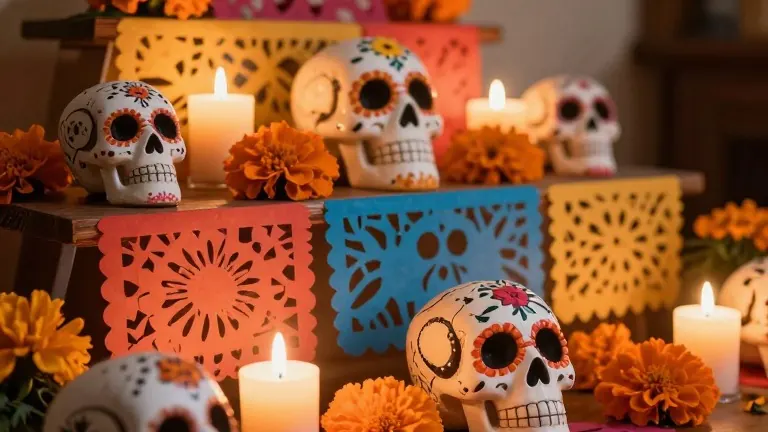
Events feature bright colors, sounds, and aromas. People paint their faces like skulls and wear vibrant costumes. They build altars, called ofrendas, for their loved ones. Decorations include plastic marigold garlands and painted sugar skulls. Marigolds are known as the flower of the dead. Their scent is believed to guide spirits back to the living.
Families gather at burial sites or at home altars. They display photos of the deceased centered on skeleton figurines. Candles, candy, and the favorite foods of the departed sit on these tables. Mariachi music often plays at cemeteries during the holiday. The scene is festive but sincere. It is a remembrance of the lives of those who came before.
The tradition has long been popular in Mexico, Guatemala, Brazil, and parts of Ecuador. Bakers there create sugar skulls and sweet bread. Artists make elaborate paper cut-outs for altars. Some families stay up all night at graves to greet returning spirits. The custom is distinct from Halloween, which is a separate cultural phenomenon.
The Chicano movement brought the celebration to the United States. Regina Marchi, a professor of journalism and media studies at Rutgers University, says Chicano artists in the 1970s celebrated Mexican ritual in the U.S. She described this as an act of political resistance and cultural pride. The term Chicano refers to Mexican Americans who are politically active in social justice issues.
Interest has grown since the 1970s. San Antonio, Texas, and Los Angeles are now major destinations for the holiday. Events also take place in New York City, Fort Lauderdale, Chicago, Phoenix, San Francisco, Seattle, and Anchorage. The festival has become a common sight in American cities.
Source: FOX 32 Chicago