Israel Votes in First Election Since 2023 Attacks
Polls show no bloc has a clear majority in the 120-seat Knesset, setting up complex coalition talks.
By Kendra Wilson ·

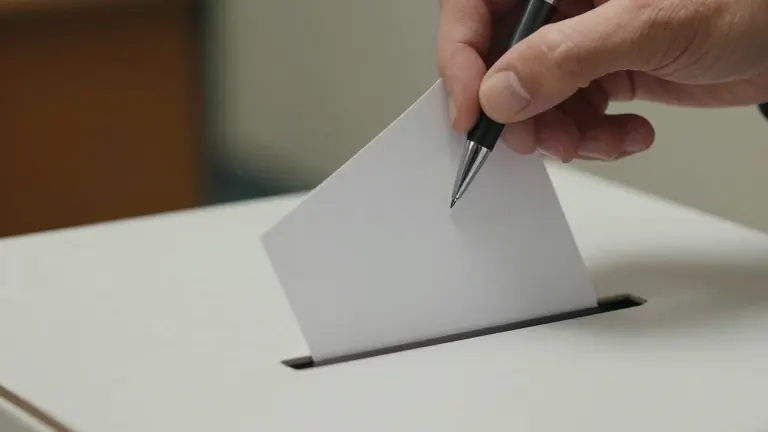
Israelis cast ballots on Tuesday in the country's first legislative election since the Hamas-led attacks of October 7, 2023. The vote determines which coalition will lead a government facing ongoing wars in Gaza and Lebanon, along with deep internal divisions. Neither of the two main political blocs holds a clear path to a majority, according to the final polls released before a publication ban took effect on Friday.
The race pits Prime Minister Benjamin Netanyahu's pro-government coalition against a unified opposition front. Netanyahu's side is built around the Likud party and includes far-right and ultra-Orthodox partners. Key allies in this bloc are United Torah Judaism, Shas, Otzma Yehudi, and Religious Zionism-Zehut. The opposition coalition unites four Jewish-led movements: Yashar, the Democrats, Yisrael Beiteinu, and the Together alliance. Yair Lapid leads the opposition effort.
A political party must win at least 3.25 percent of the vote to enter the 120-seat parliament. The last KAN survey projected 52 seats for the opposition alliance and 50 for Netanyahu's bloc. The remaining 18 seats are expected to go to unaffiliated parties, primarily the two major Arab-led lists, Ra'am and the Joint List. Both main blocs have ruled out forming a government with Arab-led parties for now. This stance could force coalition talks to produce a minority government or trigger another election.
Voters are weighing several domestic issues in their decisions. Many demand accountability for security failures that preceded the 2023 attacks. Others are focused on the military exemption granted to the ultra-Orthodox community and the recent judicial reform measures pushed by Netanyahu's government. Mairav Zonszein, a senior analyst at the International Crisis Group, stated that secular and liberal opposition factions view this vote as the last chance to save Israeli democracy.
The election arrives as Israel faces increased international criticism. Several allies have sanctioned illegal settlements in the occupied West Bank. Many countries have condemned continued military actions in Gaza and Lebanon. During Netanyahu's address to the UN General Assembly on September 24, dozens of envoys walked out of the session, with some booing.
Netanyahu, who has served as prime minister for more than 15 of the last 17 years, faces personal legal stakes. He is on trial for corruption charges he has contested since 2019. A loss in this election could leave him more vulnerable to a prison sentence if convicted. He also remains subject to an International Criminal Court arrest warrant for war crimes.
About 7.3 million citizens are eligible to vote, including roughly 1.2 million Palestinian citizens of Israel. Polling suggests turnout in that community could reach 60 percent. At that level, Arab parties could win up to 15 seats. Campaigners are targeting a 70 percent turnout, which would be the highest in decades. The Supreme Court recently reversed a Central Elections Committee decision that had barred the Joint List and Ra'am from running. The court also removed Balad leader Sami Abu Shehadeh from the race over an article describing the October 7 attacks as an important historical event.
Source: Al Jazeera