Israel Upgrades Gaza Border Fence to Counter Low-Altitude Drone Threats
The military is reinforcing gates and integrating new technology along the 64-kilometer perimeter following security assessments from the October 7 attack.
By Mateo Castillo ·
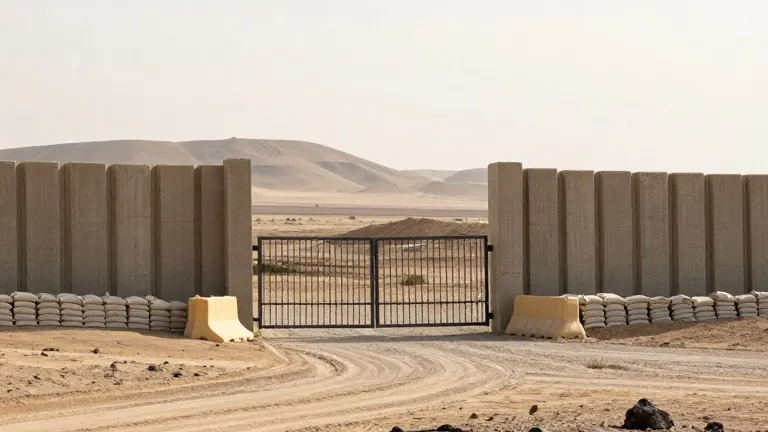
The Israeli Defense Ministry began a comprehensive overhaul of the Gaza border fence this month, aiming to fortify the perimeter against modern threats. Maj.-Gen. Eran Ofir, who commands the Borders and Seam Directorate, oversees the project. The work applies tactical lessons drawn from the October 7 attack and the subsequent war against Hezbollah in Lebanon.
The initial phase focuses on the physical integrity of the barrier. Engineers are reinforcing gates along the international border to make them more resistant to breaching. These upgrades are designed to allow military forces to pass through easily while blocking infiltration attempts in the southern and northern brigade sectors. Parallel work involves analyzing the terrain to prepare for winter weather. Seasonal streams in the area often cause soil erosion and flooding that can damage the fence structure.
Operational mobility is a key component of the third upgrade. The military is installing secured openings that enable troops to move rapidly from one side of the fence to the other. The fourth major improvement addresses the growing threat of fiber-optic drones. These devices operate at very low altitudes and presented a defensive challenge for Israeli soldiers in southern Lebanon. The Defense Ministry plans to deploy similar counter-drone technology along the border with Lebanon in the future.
The final phase involves integrating advanced intelligence-gathering systems to enhance early warning capabilities. The goal is to strengthen security across the border area by detecting threats earlier. The "Hourglass" fence, which spans 64 kilometers, has faced scrutiny since October 7. It was breached at dozens of locations during that attack, allowing thousands of fighters to enter Israeli territory.
General Staff investigations concluded that the fence originally met its design specifications. The barrier was intended to mark the boundary, delay intruders, and trigger alerts, not to serve as an absolute physical barrier. However, commanders had assumed it was impassable or that forces could quickly strike any cell attempting to breach it. On October 7, a small number of soldiers faced thousands of attackers without adequate artillery or air support.
Post-attack inquiries revealed that Hamas conducted a series of tests using explosive devices on the fence before the main assault. Southern Command identified these activities but did not share the details with the Borders and Seam Directorate. The current upgrades aim to correct these informational gaps and address the changing tactical environment along Israel's borders.
Source: The Jerusalem Post