California High-Speed Rail Loses Chief Executive Amid Spending Scrutiny
Ian Choudri stepped down after an inquiry into $600,000 in consultant travel bills, leaving the project facing a $126 billion cost estimate for its first phase.
By Kendra Wilson ·
Ian Choudri has resigned as the head of the California High-Speed Rail Authority. His departure follows a review of the agency’s financial practices, including an investigation by the Office of the Inspector General. That probe examined roughly $600,000 in travel expenses billed by consultants. The consultants did not take the train for these trips.
The project’s financial trajectory has shifted sharply since voters approved Proposition 1A in 2008. At that time, the measure authorized $9.95 billion in bonds. The original plan promised a sub-three-hour trip between San Francisco and Los Angeles. The authority’s initial estimate for the full system stood at about $45 billion. Today, the authority places the cost of the first phase at $126 billion.
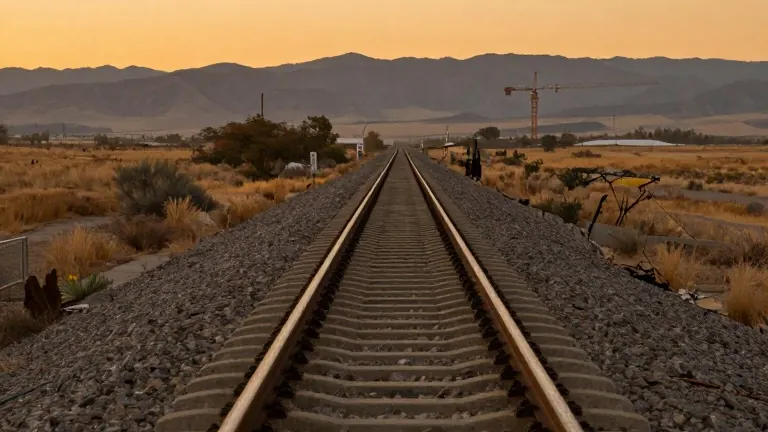
Construction efforts have focused on a 119-mile stretch in the Central Valley. The current timeline targets initial passenger service between Merced and Bakersfield in 2033. That segment is projected to cost nearly $35 billion. The authority scaled back the initial build to manage costs. It has not provided a clear explanation for why total costs have increased so dramatically.
State analysts warn that funding may not cover even this reduced scope. The California Legislative Analyst’s Office issued a warning this year that available money might fall short of completing the Merced-to-Bakersfield line. Expanding the system beyond the Central Valley faces a funding gap in the tens of billions of dollars. No current plan closes that gap.
Federal oversight has also intensified. In 2025, the Federal Railroad Administration reviewed two grants totaling more than $4 billion. The agency moved to terminate the funding based on compliance findings. California challenged those decisions in court but later dropped the lawsuit. State officials cited a decision that the federal administration was not a reliable partner.
The current service plan differs significantly from the original promise to voters. Riders traveling between major cities like Los Angeles and San Francisco will still require other forms of transportation. The Central Valley line does not connect the state’s largest population centers directly. Ross Marchand, executive director of the Taxpayers Protection Alliance, argues that a new executive cannot close a multibillion-dollar gap with leadership changes alone.
Source: Long Beach Press-Telegram