Ohio Senator Moreno Says Muslim Senate Nominee Belongs Nowhere Near Washington
A CNN/SSRS poll shows El-Sayed leading GOP nominee Mike Rogers by seven points ahead of Tuesday's vote.
By Abena Mensah ·
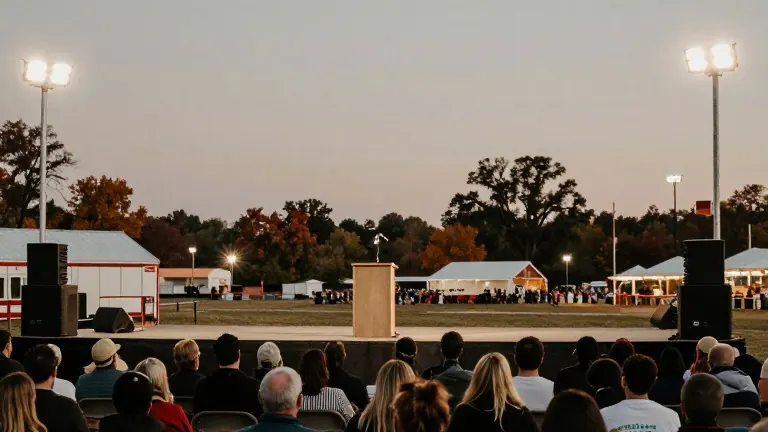
Ohio Senator Bernie Moreno told a Trump rally in Ohio on Wednesday that Democratic Senate nominee Abdul El-Sayed, a Muslim, should be kept out of the capital. "This character Abdul El-Sayed can be nowhere near Washington, DC," Moreno said. He asked whether El-Sayed understands "that concept that our rights come from God almighty, that Jesus came here for our salvation."
The remarks extend a line of attack on El-Sayed that President Donald Trump and GOP nominee Mike Rogers have already pursued. Trump has called El-Sayed a "jihadist," said metal detectors would be needed at the Senate if he is elected, and referred to him as "Mohammed" and "Abdul Ramadan." On Thursday, Trump said, "If you're Black, or if you're Jewish, and if you vote for Abdul, you're crazy."
Rogers has kept his criticism on El-Sayed's affiliations rather than his faith. In their final debate, Rogers raised El-Sayed's links to the Muslim Brotherhood, an Egyptian Islamist organization founded in Cairo, and asked, "Are you for America, or are you for these terrorist groups overseas?" El-Sayed has disavowed the group.
Article VI of the Constitution states that "no religious Test shall ever be required as a qualification to any Office or public Trust under the United States." The First Amendment bars Congress from establishing a religion or prohibiting its free exercise. Corey Brettschneider, a Brown University professor who hosts the podcast "The Oath and the Office," said the rhetoric against El-Sayed carries constitutional weight: "When you are saying we can't trust people who are Muslims and that he's going to need to enter a metal detector, unlike everyone else in Congress, that's nothing less than a religious test for office."
Moreno was born in Colombia and is a naturalized citizen. Brettschneider noted that George Washington and other founders acted to keep the country from having an official religion. "I don't think Jefferson, who of course is a primary drafter of the Declaration, was a Christian nationalist, and the framers of the Constitution and the document itself are explicitly anti-Christian nationalist. It's a rejection of theocracy," he said.
Republicans have pointed to social media posts by El-Sayed's half-sister describing how their mother was active in the Muslim Brotherhood in the 1970s. El-Sayed wrote a 2011 HuffPost article arguing that a Brotherhood government in Egypt might produce better results than continued military rule, written during the Arab Spring uprisings. After Egyptian President Hosni Mubarak fell, the Brotherhood's political wing won elections under Mohamed Morsi, who was later removed in a military coup. The Trump administration has designated some Brotherhood chapters as terrorist organizations over their support for Hamas.
El-Sayed addressed questions about his loyalties at a town hall earlier this month. He rebuked a questioner for assuming "that because I am Muslim, that somehow I would have some allegiance to something that is not our Constitution," and said, "For me, that Constitution is the guiding light."
A CNN/SSRS poll released Thursday showed El-Sayed at 49% and Rogers at 42% among likely voters in Michigan, a state with a large Muslim minority. Voters there decide the contest on Tuesday, the same day the country decides whether Democrats control the Senate.
Source: CNN