NPR Analysis: 70 House Districts Draw Six-Figure Ad Spend
Campaigners plan to deploy over $10 million in four states, with the average district in the data set voting for Donald Trump by nine points in 2024.
By Abena Mensah ·
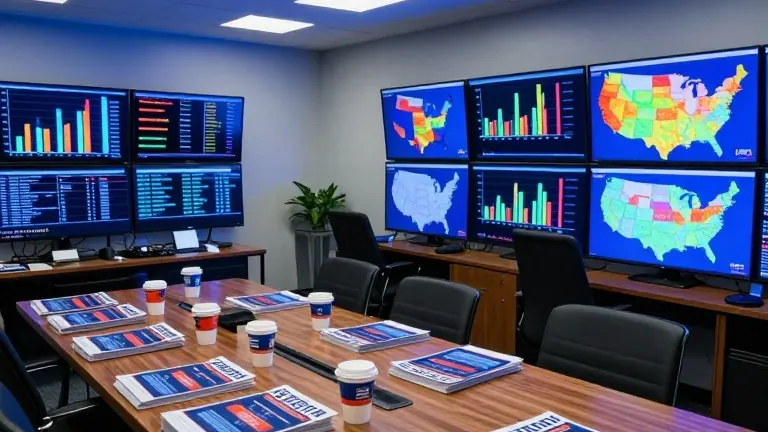
An analysis by NPR released on October 29 indicates that the primary contest in the 2026 midterm elections is centered on the extent of a potential Democratic gain in the House rather than the prevention of a wave. The data identifies 70 districts where both political parties plan to invest at least six figures in advertising for the final days before the November 3 election.
The financial commitment is concentrated in specific geographic areas. Michigan, North Carolina, New York, and Florida each face more than $10 million in combined ad spending in competitive districts. The most expensive races are Michigan’s 7th District and North Carolina’s 1st District, where planners project over $12 million in expenditures for each. Other high-cost targets include Florida’s 14th, 22nd, and 25th Districts, as well as New York’s 17th and Iowa’s 2nd and 3rd Districts.
The analysis notes that these 70 districts voted for Donald Trump by an average of nine points in the 2024 presidential election. Despite that historical lean, the current ratings from the Cook Political Report list Democrats as the favored party in 220 seats. The report identifies 17 races as toss-ups and 30 additional districts as potentially competitive but leaning toward the Republican Party.
Republicans currently hold a narrow 218-214 seat advantage in the House. The NPR data suggests this margin is likely to shift to Democratic control. A recent NPR/PBS News/Marist poll finds that Democrats maintain a 10-point advantage among registered voters and an 8-point lead with likely voters on the generic congressional ballot. This statistical edge makes a larger number of seats competitive before accounting for individual candidate quality or external spending.
Specific districts show changing financial strategies. In seats held by Democratic Representatives Adam Gray of California’s 13th District, Nellie Pou of New Jersey’s 9th District, and Marie Gluesenkamp-Perez of Washington’s 3rd District, Republicans have reduced ad reservations in recent weeks. The same trend is visible in the district held by retiring Republican Representative Don Bacon of Nebraska’s 2nd District. These areas voted for the presidential candidate of one party and the House nominee of the other in the previous cycle.
Redistricting efforts have altered the competitive map. Following a Supreme Court decision that modified the Voting Rights Act, Republicans shifted boundaries to add conservative voters to districts held by Democratic Representatives Marcy Kaptur of Ohio’s 9th District, Don Davis of North Carolina’s 1st District, Shomari Figures of Alabama’s 2nd District, and Darren Soto of Florida’s 9th District. Democrats enacted similar changes in California to affect districts held by Republican Representatives James Gallagher, David Valadao, Ken Calvert, and Darrell Issa, as well as Independent Kevin Kiley.
Economic factors remain the dominant theme in voter messaging. The analysis cites rising gas prices, new tariffs, and the war in Iran as key drivers of cost-of-living concerns. These issues are compounded by a record number of congressional retirement announcements and a streak of anti-incumbency results in primary elections. The unpopularity of the current administration is reflected in the fact that 60 of the 70 targeted districts are listed as priorities by both the Democratic and Republican House campaign arms.
Not all districts with high potential for change will result in close elections. Many of the Democratic Congressional Campaign Committee’s designated 'Districts In Play' voted for Trump by closer to 60% in 2024 and have seen minimal advertising spend from either side. The 70 districts with six-figure spending from both parties represent the core financial battleground for the final week of the campaign.
Source: WUWF
More Business · Rip-Off Report · Report a business · Got a Story?