120 seats at stake in Israel's tightest election since 2023
Voters cast ballots Tuesday in a contest where no side is projected to win a majority, leaving the outcome to depend on turnout and coalition negotiations.
By Abena Mensah ·

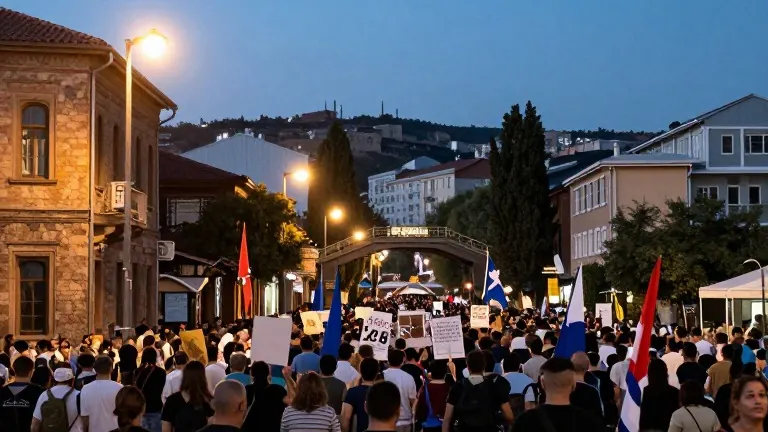
Israelis face a critical decision Tuesday as they vote in a parliamentary election for 120 seats in the Knesset. No polling firm projects a decisive winner for either the coalition led by Prime Minister Benjamin Netanyahu or the opposition bloc seeking his removal. Most forecasts indicate that neither side will secure the 61 seats required to form a government independently, setting the stage for potential deadlock.
The campaign has been defined by the ongoing conflict following the October 7, 2023, Hamas attack. Netanyahu, who leads the Likud party, argues that his experience is necessary to finish military operations in Gaza, Lebanon, and Iran. He claims that a government including Arab parties poses a security risk. His campaign slogan translates to "Either right wing or Palestine, either right wing or a nuclear bomb." President Donald Trump endorsed Netanyahu last week, stating that the United States would not be inclined to continue the war effort if a different leader took office.
The opposition, referred to as the change bloc, is led by former military chief Gadi Eisenkot of the Yashar party. Eisenkot lost his son and two nephews in the Gaza war and served in the war cabinet alongside Netanyahu during the first year of the conflict. He criticizes Netanyahu for using fear regarding Iran and promises to launch a state inquiry into the intelligence failures of October 7. Eisenkot's slate includes approximately half women, a demographic contrast to the male-dominated Netanyahu coalition.
Analysts point to voter turnout as a deciding factor. Arab Israelis comprise about 20 percent of the population, and their participation often fluctuates. Yohanan Plesner, president of the Israel Democracy Institute, noted that higher Arab turnout reduces the likelihood of Netanyahu forming a government with his current far-right allies. Jehad Abomoch, a cafe owner in Baqa al Gharbiya, said many in his community feel they have no hope under the current administration and will vote to prevent another term.
Two new parties focused on conscripting ultra-Orthodox men into mandatory military service are hovering near the threshold to enter the Knesset. Their success could disrupt the traditional alliance between Netanyahu and religious groups. If neither bloc wins a majority, parties may negotiate for weeks to form a coalition. Alternatively, the change bloc could attempt to form a minority government, which requires only a plurality of seats rather than an absolute majority.
If negotiations fail, Israel will hold new elections. Between 2019 and 2022, the country held five elections due to similar deadlocks. Plesner said that if politicians stick to their promises and refuse to switch sides, another vote is likely, though most politicians prefer to avoid that scenario.
Source: CBS News