Turkey's $30 Billion Auto Trade Faces New EU Barrier
A German-French compromise excludes Turkey from new 'Made in Europe' rules, threatening the destination for 73% of its vehicle exports.
By Kendra Wilson ·
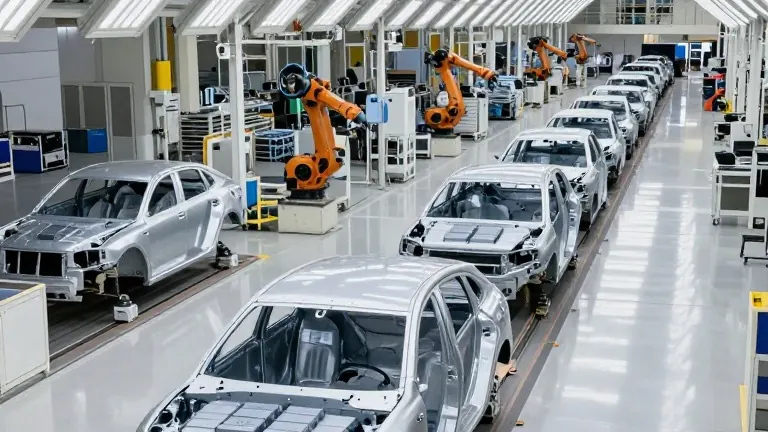
A compromise reached by Germany and France this month sets new rules for European car manufacturing that exclude Turkey, Morocco, Japan, and South Korea.
The Industrial Accelerator Act, proposed in March, aims to protect the European auto sector from Chinese trade practices by limiting subsidies to vehicles produced within Europe. Under the revised plan, a vehicle must derive 70% of its component value, excluding the battery, from European sources to qualify for support. Non-EU suppliers from the United Kingdom and Norway may still earn 'European origin' status, while other major partners are left out.
Turkey stands to lose the most. Ayhan Zeytinoglu, chairman of the Economic Development Foundation, told Deutsche Welle that 73% of Turkey's total automotive exports go to the EU. The country's auto exporters association OIB reported that these exports totaled $30.1 billion, or €26.8 billion, last year. Zeytinoglu argued that excluding Turkey would hurt European carmakers more than it would help them compete with China.
The rules initially apply only to battery-electric vehicles, plug-in hybrids, and fuel-cell models, which accounted for 27% of new EU car registrations last year. Tommaso Pardi of the research network GERPISA noted that an average European-made electric car already has around 83% of its parts from Europe, making the 70% threshold generous. However, the plan will expand to include self-charging hybrids and petrol or diesel vehicles sold after 2035. Most of Turkey's nearly 800,000 vehicle exports to the EU last year would fall into this broader category.
The exclusion of Turkey is partly driven by concerns over Chinese access to the EU market. Chinese automakers are expanding in the region, though with mixed results. SWM Motors closed its Eskisehir factory within a year after failing to meet EU safety standards, and BYD's planned $1 billion plant in Manisa is on hold. Morocco has attracted more than €10 billion in Chinese investment since the pandemic, according to AlixPartners, with much of it focused on batteries and parts.
Japanese and South Korean manufacturers also face risks. Cars imported from Japan would not receive EU subsidies, while models built in Europe would qualify only if they meet the European content requirements. Hyundai and Kia build cars in the Czech Republic and Slovakia but also ship models from Asia that would not qualify. Korean battery plants in Poland and Hungary would count as European.
European parts suppliers support the stricter rules, warning that up to 650,000 auto jobs in the region could be lost by 2035 without better protection. Benjamin Krieger, Secretary General of CLEPA, said, 'We must stop the bleeding.' He suggested an opt-in mechanism based on objective criteria such as regulatory alignment, social and environmental standards, and the rule of law, stating, 'Partners that meet them are welcome.'
Source: Deutsche Welle
More Business · World news · Rip-Off Report · Report a business · Got a Story?