
Heat and drought shrink white truffle harvest in European forests
Prices at the International White Truffle Fair in Italy are rising by as much as 30 percent as hunters in Italy and Croatia report smaller yields due to warmer, drier summers.
By Emily Lawson ·
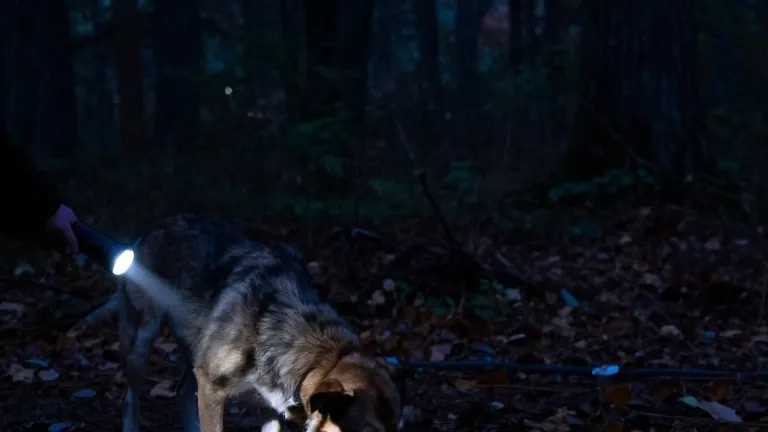
White truffle hunters in the hills of Alba, Italy, are finding fewer fungi beneath the soil this autumn. The shortage has pushed prices up at local markets and prompted scientists to examine how changing weather patterns are affecting the delicate ecosystem required for truffle growth.
The International White Truffle Fair opened on Oct. 10 in Alba and continues through Dec. 6. The event draws thousands of visitors to the Langhe hills, a region famous for the white truffle. Despite high demand and sold-out accommodations, suppliers have less product to sell. Prices at the market are running 20 to 30 percent higher than they were last year, according to Axel Iberti, the fair's president.
Antonio Degiacomi, president of Italy's National Centre for Truffle Studies, attributed the poor harvest to a lack of rain in July and August, followed by high temperatures through October. The dry conditions caused the soil to become compacted, which resulted in smaller truffles and reduced shelf life for the fungi once harvested.
Truffle hunters, known locally as trifolau, traditionally begin their season on Oct. 1. Tino Marolo, a hunter who works in the wooded areas around Alba with his dog Stella, said uncertainty is inherent in the job. He noted that he often returns empty-handed, describing the process as a thrill of discovery rather than a guaranteed harvest.
Similar issues are reported across the Adriatic Sea in Croatia. Petar Alebic, a truffle hunter near Zagreb, said the past seven or eight years have been progressively worse due to drought. He estimates this year's harvest is about 30 percent below normal levels. To maintain his income, Alebic has begun leading truffle-hunting tours for tourists.
Armin Mesic, a mycologist at the Rudjer Boskovic Institute in Croatia, confirmed that the country is home to about a dozen truffle species. He stated that drought and high temperatures negatively impact both the quantity and quality of the fungi. Mesic added that the geographical area where white truffles can grow is also declining. White truffles in Croatia can sell for up to 4,000 euros, or approximately $4,500, per kilogram.
Experts do not believe the white truffle is facing extinction, but they view the situation as a major challenge. Degiacomi said researchers are studying soil microorganisms and looking for tree varieties that tolerate heat better. In Alba, officials are working with municipalities and landowners to plant new trees and create public truffle grounds. Iberti said the fair now includes conservation efforts and environmental education, aiming to protect the forests that support the industry for the next two to three generations.
Source: La Voz de Houston · original report published