40 Million Cameras: Flock Safety System Tracks Walkers
A security researcher found dozens of Flock Safety cameras streaming live online, contradicting the company's claim that its devices do not track pedestrians.
By Kendra Wilson ·
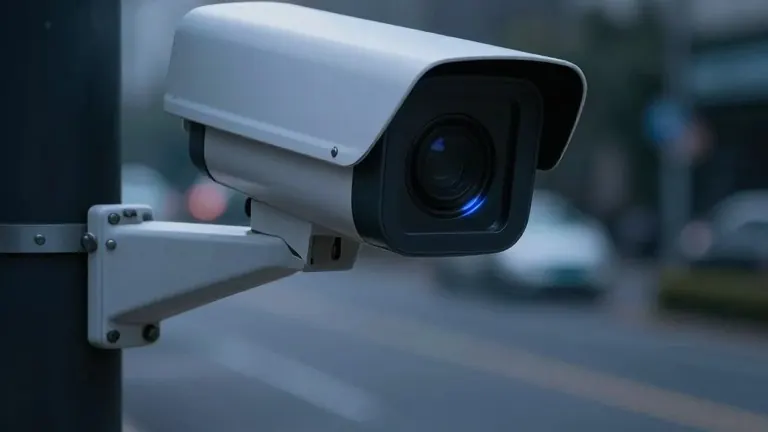
Drivers and pedestrians in the United States are increasingly under observation by a network of automated cameras that claims to monitor only vehicles. Flock Safety operates this system, which the company says uses artificial intelligence to distinguish cars from people. However, a new review of the company's internal materials and live feeds suggests the technology tracks human movement as well.
The tension between the company's public statements and its operational reality has raised questions about privacy for ordinary citizens. Flock Safety maintains that its cameras do not track people. Yet, the company's own training videos depict police officers using the software to track suspects across multiple locations. In one instance, the footage shows the system zooming in on a specific individual as they walk.
Benn Jordan, a security researcher, identified dozens of Flock Safety cameras that stream data openly on the internet. Jordan noted that the system uses AI to zoom in and follow individuals, regardless of whether they are a person of interest. This capability exists even when the primary target is a vehicle, effectively turning the camera into a pedestrian tracker.
The expansion of this camera network has outpaced public understanding of its capabilities. As the number of units capturing vehicle information grows, so do the concerns about how that data is used. The system is designed to identify license plates, but the underlying AI appears to maintain a focus on human figures in the frame.
Jordan's discovery adds to a timeline of increasing surveillance capabilities. The company has installed millions of these units across the country. The live streams found by Jordan were not behind a login or paywall, allowing anyone with the correct link to view the footage in real time.
The company has not yet issued a detailed response to the specific findings regarding the open streams. The training videos that show the tracking of pedestrians remain available to law enforcement partners who use the platform. These materials serve as the primary guide for how officers should interpret the data generated by the cameras.
The next step in this review involves a deeper audit of how many cameras are currently broadcasting without protection. Jordan and other researchers plan to map the extent of these open feeds. This data will provide a clearer picture of how widely the pedestrian tracking feature is active across the Flock Safety network.
Source: WWSB